
How to Create a Website in Kenya: A Complete Step-by-Step Guide
If your business does not have a website yet, you are missing one of the most powerful tools for attracting customers and growing revenue in Kenya’s digital economy.
Learning how to create a website in Kenya is more accessible than most people think. With the right tools and a clear plan, any business owner can get a professional site online without a technical background. This guide walks you through every step — from choosing a domain name to launching and optimizing for Google. For related reading, visit our Website Design Cost in Kenya, Affordable Web Design Services in Kenya for Small Businesses, and Web Designer vs Web Developer in Kenya.

Why Every Kenyan Business Needs a Website
Kenya’s internet usage is growing fast. Millions of consumers use Google every day to search for products and services before they ever call or visit a business.
If your business does not appear online, those customers find your competitors instead.
A professional website builds trust, showcases your services, and generates leads around the clock , even when you are unavailable.
Knowing how to create a website in Kenya is not just a technical skill. It is a business investment that pays dividends for years.
Every day without a website is a day of missed opportunities , which is why understanding how to create a website in Kenya has never been more urgent for Kenyan businesses.
Pro Tip: Before you start building, define your goal. Ask yourself: what do you want visitors to do when they land on your site ,either, call you, fill in a form, or make a purchase? Your answer shapes every decision that follows in how to create a website in Kenya.
Step 1: Plan Your Website Structure
The first step in how to create a website in Kenya is planning. Many business owners skip this and jump straight into design , which leads to a site that looks acceptable but fails to convert visitors.
Start by defining what type of site you need. Is it a service website, a portfolio, an e-commerce store, or a lead-generation platform?
Then map out your pages. Most Kenyan business websites need at minimum:
- Home page
- About page
- Services or Products page
- Blog or Resources section
- Contact page
Writing this structure down before you begin keeps the project focused and prevents costly scope creep.
A clear blueprint is the most underrated part of how to create a website in Kenya , the cleaner your plan, the smoother everything that follows.
Many businesses that struggle after launch skipped this foundational step when they started learning how to create a website in Kenya.
Step 2: Choose and Register a Domain Name
Your domain name is your website’s address , for example, yourbusiness.co.ke or yourbusiness.com.
Choosing the right domain name is a key step in how to create a website in Kenya because it forms part of your brand identity and appears on every link, email, and marketing material you produce.
It is also one of the most permanent decisions in how to create a website in Kenya — changing it later disrupts your SEO and brand recognition.
A good domain name is short, easy to spell, easy to remember, and directly related to your business name or service. For most Kenyan businesses, a .co.ke extension signals local presence and builds trust with Kenyan audiences.
Avoid hyphens, numbers, and names that are too long or difficult to type.
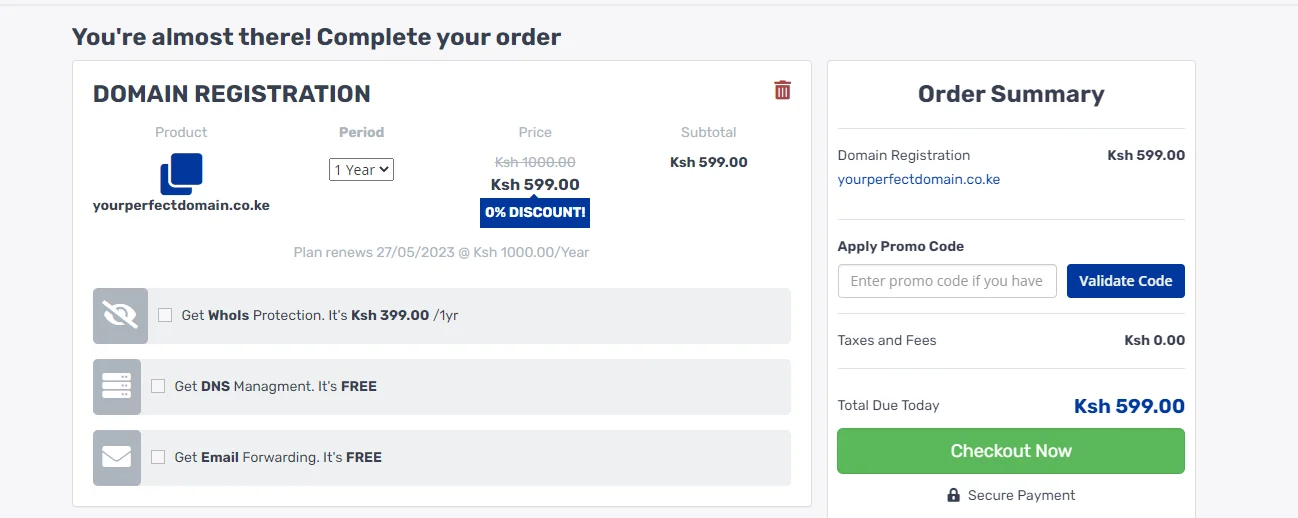
In Kenya, you can register a .co.ke domain through providers like Truehost Kenya, SasaHost, or Namecheap. Registration typically costs between KES 1,000 and KES 3,000 per year depending on the extension.
Secure your domain name early , your preferred name may not be available later.
Getting this right the first time saves you from a costly rebrand further down the process of how to create a website in Kenya.
Step 3: Choose a Web Hosting Provider
Web hosting is the service that stores your website’s files and makes them visible to anyone who visits your domain. It is a non-negotiable step in how to create a website in Kenya, and the provider you choose directly affects your site’s speed, uptime, and security.
For most small and medium businesses in Kenya, shared hosting is the most practical starting point. It is affordable and sufficient for business websites that do not receive extremely high traffic.
Look for a host that offers fast server speeds, a free SSL certificate, regular backups, and responsive customer support. Reputable options for Kenyan businesses include Truehost Kenya, SasaHost, and Hostpinnacle.
Pay close attention to uptime guarantees. A provider offering 99.9% uptime means your site will be available almost all of the time.
Downtime costs leads. Budget between KES 3,000 and KES 10,000 per year for a reliable shared hosting plan.
Step 4: Choose the Right Way to Build Your Website
Once your domain and hosting are in place, you need to decide how to actually build your website.
This is one of the most consequential decisions in how to create a website in Kenya , it shapes everything from design flexibility to long-term SEO performance.
There are six main approaches to how to create a website in Kenya. Each suits a different budget, skill level, and business goal.
1. WordPress (Self-Hosted)
WordPress is the most widely used website platform in the world and the strongest choice when learning how to create a website in Kenya for most businesses. It remains the number one recommendation in how to create a website in Kenya for good reason.
It powers over 40 percent of all websites globally and offers thousands of themes, plugins, and customization options. Its open-source nature means no ongoing licensing fees.
For businesses that want strong SEO, full design control, and long-term scalability, WordPress is the platform of choice in how to create a website in Kenya.
You can also read our guide on web designer vs web developer in Kenya to understand who you may need to help build it.
2. Website Builders (Wix, Squarespace, Weebly)
Website builders are drag-and-drop tools that let you create a website without any coding knowledge.
Wix, Squarespace, and Weebly all offer ready-made templates, built-in hosting, and simple content management. You can have a basic site live within a few hours.
They are ideal for individuals, freelancers, or very small businesses that need a simple online presence quickly.
However, they offer less design flexibility and weaker SEO capability than WordPress. If you are serious about how to create a website in Kenya that ranks on Google and grows with your business, WordPress is the stronger long-term choice.
3. E-Commerce Platforms (Shopify, WooCommerce)
If your primary goal is selling products online, a dedicated e-commerce platform is the right starting point.
Shopify handles payments, inventory, shipping, and order management out of the box. It is fast to set up and well-suited for product-focused businesses.
WooCommerce is the e-commerce plugin for WordPress and gives you the same selling capabilities with more design freedom and lower ongoing costs.
For most Kenyan online stores, WooCommerce on WordPress is the more cost effective approach to how to create a website in Kenya that sells products online.
4. Website Templates and Themes
Rather than building from scratch, many businesses in Kenya use premium pre-built templates as a starting point in how to create a website in Kenya.
Platforms like ThemeForest offer thousands of professional WordPress themes for specific industries like restaurants, law firms, agencies, e-commerce, and more. A well chosen theme can significantly reduce design time and cost while still delivering a polished result.
The key is to customize it properly with your branding, content, and SEO settings. A template that has not been personalized looks generic and fails to build trust , defeating the purpose of how to create a website in Kenya that represents your business well.
5. Custom Web Development
Custom development means building your website from scratch using code such as HTML, CSS, JavaScript, PHP, or a framework like React or Laravel.
This approach gives you complete control over every feature, design detail, and user interaction. It is the right choice for complex web applications, custom portals, booking systems, or any site with unique functionality that no off-the-shelf platform can handle.
Custom development costs more and takes longer, but delivers a result entirely tailored to your business.
For most standard business websites, WordPress with a premium theme is the more practical approach to how to create a website in Kenya but for complex projects, custom development is the only route. See our web design services in Kenya to understand what approach suits your specific project.
6. Hiring a Professional Web Design Agency
The final option for how to create a website in Kenya and often the smartest for growing businesses is to hand the entire project to a professional agency.
A good agency handles everything: strategy, design, development, content structure, SEO setup, and launch. You focus on your business while experts build a site that is fast, professional, and optimized from day one.
This is the highest-cost option upfront but almost always the highest-return decision for any business that wants to know how to create a website in Kenya that consistently generates leads and revenue. Our web design services in Kenya page explains exactly how we work and what is included in every project.
| Approach | Best For | Skill Level | Cost |
|---|---|---|---|
| WordPress | Most business websites, blogs, SEO-focused sites | Beginner to intermediate | Low hosting + theme only |
| Website Builders (Wix, Squarespace) | Simple sites, freelancers, personal pages | Complete beginner | Low monthly subscription |
| Shopify | Product-focused online stores | Beginner | Medium — monthly fees apply |
| WooCommerce (WordPress) | Online stores with content needs | Intermediate | Low — plugin is free |
| Premium Templates/Themes | Businesses wanting fast, polished results | Beginner to intermediate | Low — one-time theme cost |
| Custom Development | Complex web apps, unique functionality | Developer required | High — custom build rates |
| Professional Agency | Businesses that want everything handled | No skills needed | Medium to high full service |
Step 5: Design Your Website
Design is one of the most visible outcomes of how to create a website in Kenya. It is not just about looks , it is about creating an experience that builds trust, communicates your brand clearly, and guides visitors toward taking action.
If you want a professionally designed website built for you, see our web design services in Kenya to find out how we approach every project.
If you are using WordPress, start with a professional theme that matches your industry. Premium themes like Astra, GeneratePress, or Divi give you a strong visual foundation. Customize with your brand colors, logo, fonts, and imagery.
Every page should have a clear heading, a logical content structure, and a visible call to action that tells visitors exactly what to do next.
For Kenyan businesses, mobile design is non-negotiable. The majority of internet users in Kenya browse on smartphones.
Your site must look and function perfectly on small screens. Most modern WordPress themes are mobile-responsive by default, but always test on a real phone before going live.
Important: Poor mobile experience is one of the most common reasons Kenyan businesses fail to benefit from their websites even after investing significant time and money. Test on a real phone before you launch — not just a desktop browser simulation.
Step 6: Write and Build Your Core Pages
Once your design framework is in place, it is time to write and build your core pages. This stage of how to create a website in Kenya is where your site starts to feel real , each page serves a specific purpose and should be written for both users and search engines.
Your Home page must clearly communicate who you are, what you offer, and who you serve within the first few seconds.
Your About page tells your story and builds personal connection. Your Services page describes your offerings using the language your customers actually search for.
Your Contact page should include your phone number, email, location, and a simple contact form.
Every page you build as part of how to create a website in Kenya should include your target keyword in the title tag and headings, a clear meta description, internal links to related pages, and at least one call to action.
These are the fundamentals of on-page SEO — visit our On Page SEO Guide for a full breakdown of how to optimize each element correctly.
Step 7: Optimize Your Website for Search Engines
A beautifully designed website that no one can find on Google delivers very little business value.
This is why SEO is an inseparable part of how to create a website in Kenya , it must be built in from the start, not added as an afterthought.
Skipping it is the most common reason businesses fail to get results after investing in how to create a website in Kenya.
Install an SEO plugin such as Yoast SEO or Rank Math on your WordPress site. These guide you through optimizing each page’s title, meta description, headings, and keyword usage as you write.
Ensure every page targets a specific keyword that your customers are actually searching for. Use Google Search Console to submit your sitemap, monitor indexing, and identify technical issues.
For businesses serving a specific area, local SEO is essential. Set up your Google Business Profile and keep your name, address, and phone number consistent across all platforms.
Our Local SEO Kenya Guide covers this in full detail. For the technical side of your site’s performance, see our Technical SEO Guide.
Step 8: Test and Launch
Before going live, thorough testing is critical. A website that launches with broken links, slow load times, or mobile formatting errors creates a poor first impression that is difficult to recover from.
| Pre-Launch Check | What to Verify | Why It Matters |
|---|---|---|
| Mobile Responsiveness | Test every page on a real smartphone | Most Kenyan users browse on mobile |
| Page Speed | Run Google PageSpeed Insights on key pages | Slow sites lose visitors and rank lower |
| Broken Links | Click every link and button across all pages | Dead links damage credibility and SEO |
| Contact Forms | Submit a test enquiry through every form | Broken forms mean lost leads |
| SSL Certificate | Confirm HTTPS is active across all pages | Google prefers secure sites; users trust them more |
| SEO Basics | Confirm title tags, meta descriptions, and H1s are set | Missing SEO elements delay Google indexing |
| Google Search Console | Submit your sitemap after launch | Helps Google find and index your pages faster |
Step 9: Maintain and Grow Your Website
Launching your site is not the end of how to create a website in Kenya , it is the beginning. The businesses that truly benefit from knowing how to create a website in Kenya are those that commit to maintaining and growing it after launch.
After you complete how to create a website in Kenya, publish blog posts regularly to attract new search traffic and build authority.
Update your service pages when your offerings change. Monitor your Google Search Console data to understand what is driving traffic and what needs improvement.
Back up your website regularly so a technical failure never means losing your content. Keep your WordPress themes and plugins updated to protect against security vulnerabilities.
Businesses that treat their website as a living asset consistently outperform those that set it up and forget it.
Over time, the result of knowing how to create a website in Kenya and maintaining it consistently becomes your most cost effective marketing channel by generating traffic, leads, and sales without ongoing advertising spend.
Should You Build It Yourself or Hire a Professional?
Building it yourself is one approach to how to create a website in Kenya that saves money upfront and gives you full control over updates.
However, it requires time to learn the tools and may result in a site that lacks the design polish and SEO depth that a professional build delivers.
For many growing businesses in Kenya, the opportunity cost of spending weeks learning how to create a website in Kenya from scratch outweighs the savings. Knowing when to delegate is itself part of knowing how to create a website in Kenya smartly.
Hiring a professional agency ensures your site is built to a high standard, optimized for search engines from day one, and delivered efficiently.
If your website is a primary driver of business leads, professional help is almost always the higher-return decision when thinking about how to create a website in Kenya.
Read our web designer vs web developer in Kenya guide to understand exactly which type of professional your project needs.
How J&M Digital Solutions Can Help
At J&M Digital Solutions, we help Kenyan businesses with every step of how to create a website in Kenya , from the very first domain registration to post-launch growth.
We build professional, fast, SEO-ready websites that attract real customers and deliver measurable results. View our web design services in Kenya to see exactly what we offer and how we work.
Whether you need full guidance on how to create a website in Kenya from scratch, or want a fully managed service, our team handles everything from domain setup, hosting, custom design, content structure, on-page SEO, and post-launch support.
We build every website with search visibility and user experience at the core.
Our deep understanding of the Kenyan market means every site we build is designed for the users your business actually serves.
Why Choose J&M Digital Solutions
When it comes to how to create a website in Kenya that truly performs, experience and local market knowledge make all the difference.
- Complete website creation from domain to launch and beyond
- SEO-optimized structure built into every page from the start
- Mobile-first design built for Kenya’s smartphone users
- Affordable packages for small and medium Kenyan businesses
- Ongoing support so your website keeps performing after launch
Ready to Create Your Business Website in Kenya?
Stop putting it off. J&M Digital Solutions is ready to help you build a professional, high-performing website that puts your business in front of the right customers across Kenya.
Phone / WhatsApp: +254 769 604 780
Website: jmdigitalsolutionske.com
Service Area: Serving businesses across Kenya
Frequently Asked Questions (FAQs)
How much does it cost to create a website in Kenya?
A basic DIY WordPress website can cost as little as KES 5,000 to KES 15,000 in domain and hosting fees. A professionally built business website typically ranges from KES 30,000 to KES 120,000 depending on the number of pages and level of custom work required. E-commerce websites cost more depending on functionality.
How long does it take to create a website in Kenya?
A simple business website can be ready in one to two weeks if all content and brand assets are prepared. More complex websites with custom design and multiple features typically take three to six weeks. Working with a professional agency usually shortens the timeline significantly.
Do I need coding skills to create a website in Kenya?
No. Platforms like WordPress with Elementor allow you to design and build a fully functional website using a visual drag and drop interface , no coding required. Coding skills only become necessary for advanced custom features beyond what plugins and themes can provide.
What platform is best for creating a website in Kenya?
WordPress is the most recommended platform for how to create a website in Kenya for most businesses. It offers the best combination of flexibility, SEO capability, design options, and long-term scalability.
For online stores, WooCommerce on WordPress or Shopify are both strong choices. For complete simplicity, website builders like Wix work but WordPress is the best foundation for how to create a website in Kenya that ranks and scales.