
A file that looks perfect on a laptop screen can come back from the printer looking washed out, blurry, or oddly cropped. That gap catches a lot of Kenyan business owners off guard, because the print vs digital design divide is not just about where an asset ends up. It is a completely different set of technical rules, and treating one file as suitable for both is one of the most common ways a brand ends up looking unprofessional in print.
This guide breaks down the real differences behind print vs digital design, where the two overlap, and the mistakes that cause printed materials to come out looking nothing like what was approved on screen. For the identity work that both formats need to stay consistent, our graphic design and branding services page covers logos, guidelines, and full collateral design.
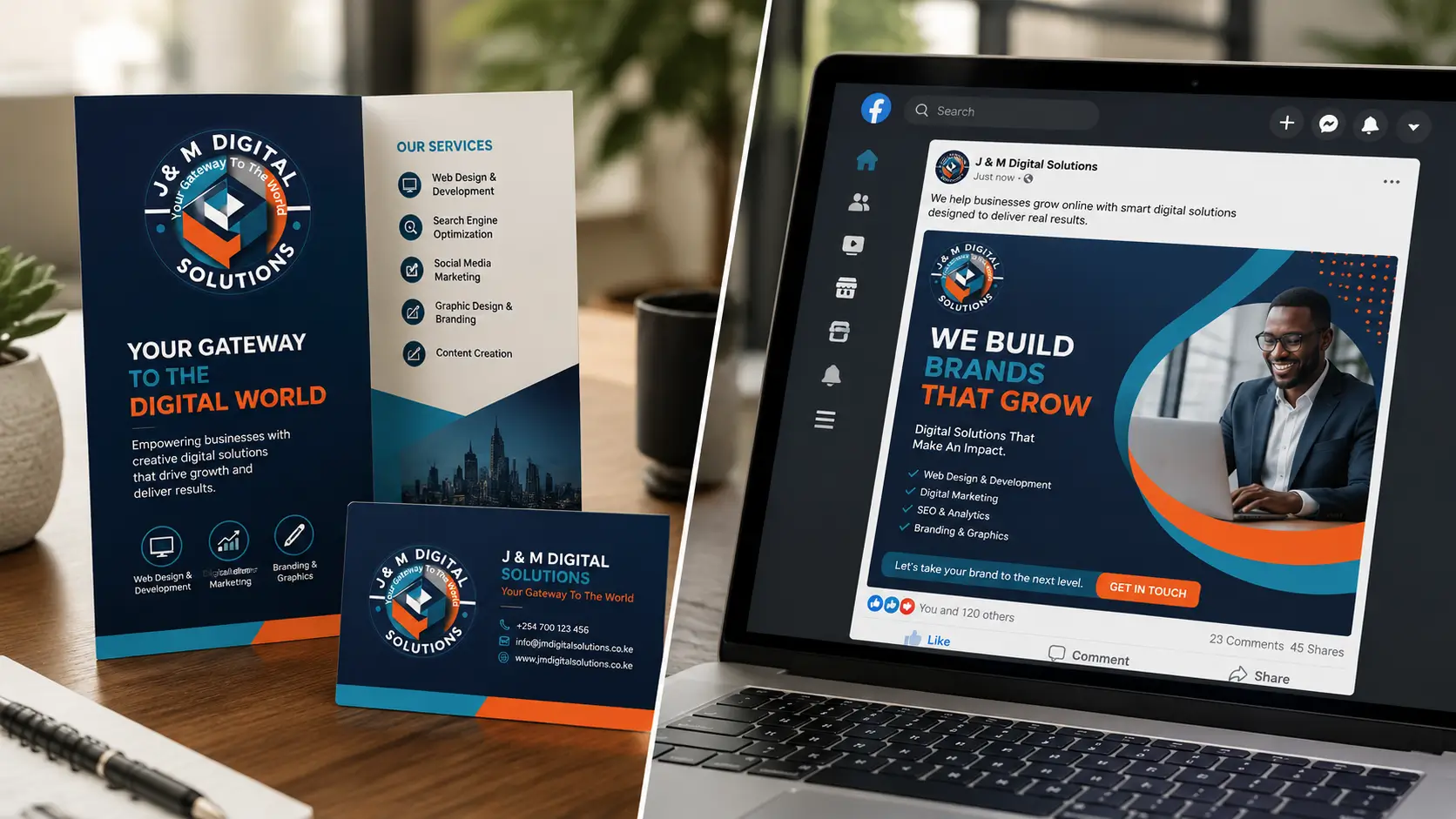
Print vs Digital Design: The Core Difference
At the centre of print vs digital design is one basic fact: a screen builds colour with light, and a printer builds colour with ink. That single difference is why a file that looks bright and saturated on a phone can print noticeably duller, and why designers treat the two as separate disciplines rather than one skill applied twice.
Key fact: Digital design works in RGB colour mode, built from red, green, and blue light. Print design works in CMYK, built from cyan, magenta, yellow, and black ink. Sending an RGB file straight to a printer is one of the most common reasons colours shift unexpectedly between screen and paper.
| Digital Design | Print Design |
|---|---|
| Colour mode: RGB | Colour mode: CMYK |
| Resolution: typically 72 to 150 DPI | Resolution: minimum 300 DPI |
| No bleed or trim margin needed | Requires bleed and safe zone margins |
| File formats: PNG, JPG, or editable web formats | File formats: print-ready PDF, AI, or EPS |
| Can be updated instantly after publishing | Fixed once printed, mistakes are costly to correct |
What Digital Design Is Best For
Digital design is the right call whenever speed, reach, or frequent updates matter more than physical presence. Social media graphics, website banners, email newsletters, and paid ad creatives all fall firmly on the digital side of print vs digital design, since they need to be produced quickly and adjusted often.
What Print Design Is Best For
Print design still earns its place wherever a physical, tangible presence builds more trust than a screen can, or where a customer needs something they can hold, hang, or keep. Business cards, brochures, signage, packaging, and banners are the clearest examples, and for many Kenyan SMEs, they remain the first material a new customer physically encounters.
Resolution and Detail
A logo or image that looks sharp at social media size can appear pixelated once enlarged for a banner or shopfront sign. Print materials need source files built at high resolution from the start, not simply scaled up later.
Colour Mode
Converting a bright RGB design into CMYK often shifts certain colours, particularly vivid blues and greens. A designer working in print vs digital design regularly builds print files in CMYK from the outset to avoid last-minute surprises.
Bleed and Safe Zones
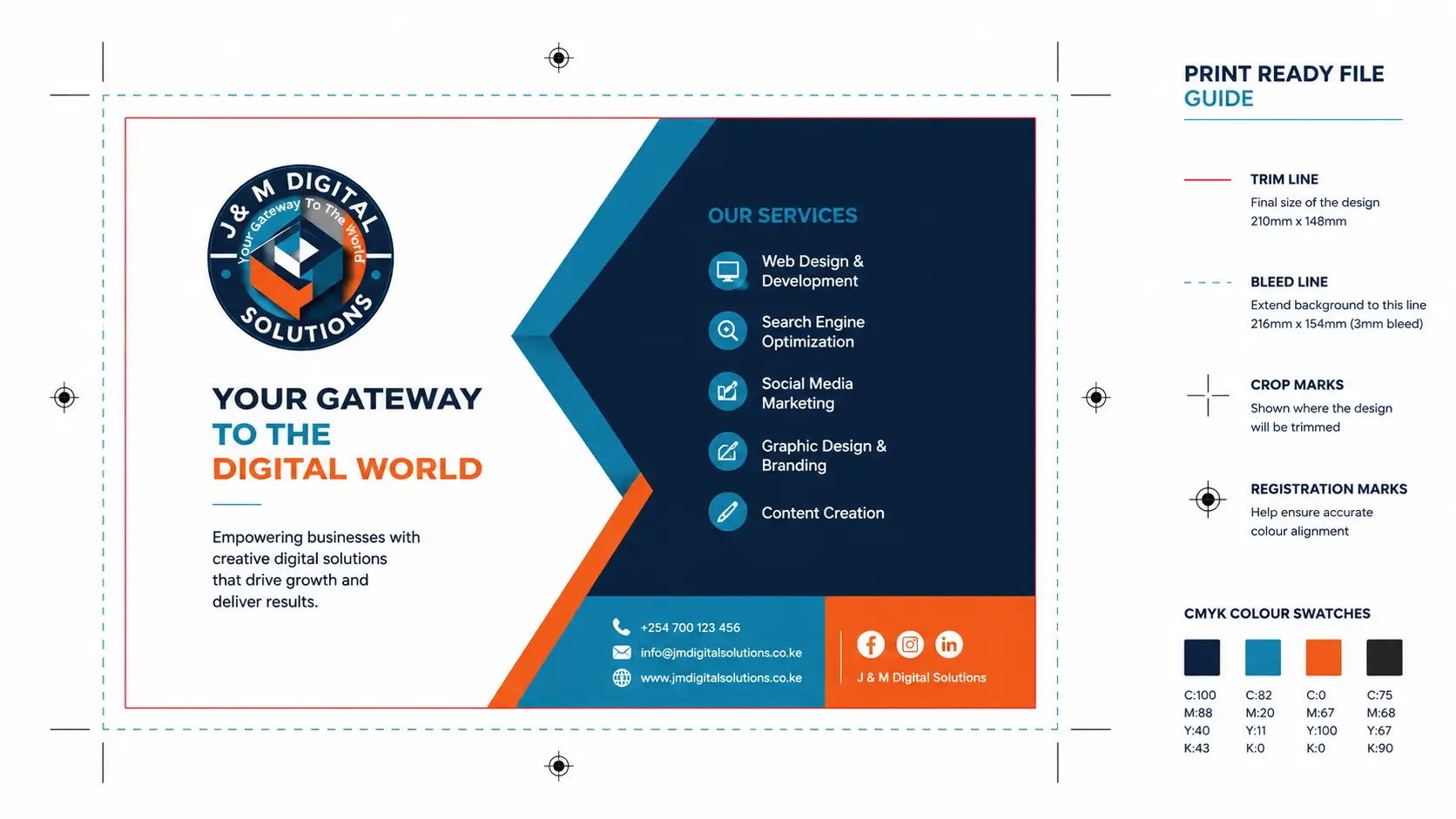
Printers trim paper after printing, and slight shifts are normal. Designs need extra colour extending past the trim line, called bleed, so no unwanted white edge appears once the final cut is made.
File Delivery
A digital design can be exported as a compressed PNG or JPG with no issue. A print-ready file needs to be a high-resolution PDF or vector format that a commercial printer can open without quality loss.
Where Print and Digital Design Overlap
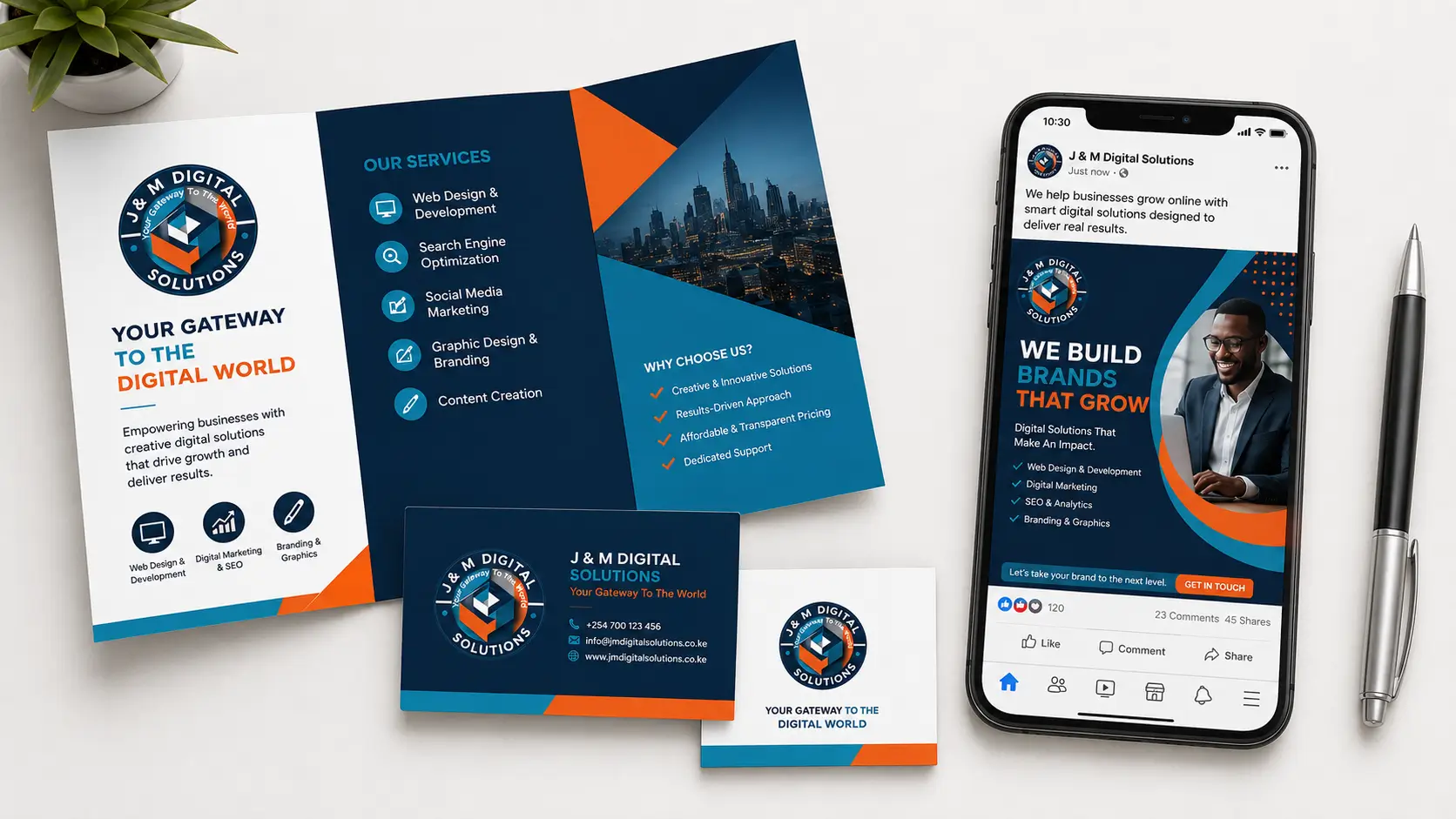
Most growing Kenyan businesses do not need to choose one side of print vs digital design over the other. A retail shop needs a website and social media presence for digital marketing alongside in-store signage and packaging that customers physically pick up. Brand consistency across both formats is what actually ties print vs digital design together: the two only work well when they are built from the same brand identity guidelines, so colours, fonts, and logo usage stay consistent whether a customer sees the brand on a phone screen or a printed flyer.
Client: Real Estate Agency, Nairobi
This project shows why print vs digital design decisions matter for a business working across both formats at once. A real estate agency in Nairobi needed printed property brochures for physical viewings alongside digital listing graphics for their website and social media. Their existing files were built for screen use only, so brochures printed with dull, shifted colours and a logo that looked soft at full page size. We rebuilt the identity assets in both formats, CMYK print files with proper bleed for brochures and signage, and optimised RGB versions for digital marketing and listings.
These figures reflect one client’s project and are not a guaranteed timeline for every business. The number of print materials and digital assets involved affects how long a combined project takes.
Common Print vs Digital Design Mistakes
These are the mistakes we see most often when a Kenyan business treats print vs digital design as interchangeable rather than two separate technical processes, and it usually costs them brand consistency across the two.
| Mistake | What Goes Wrong |
|---|---|
| Sending an RGB social media file straight to a printer | Colours print duller or shifted compared to how they looked on screen |
| Using a low-resolution logo pulled from a website | Logo appears blurry or pixelated once enlarged for signage or banners |
| Designing without bleed for a business card or flyer | Risk of an unwanted white edge appearing after the final trim |
| Skipping brand identity guidelines across formats | Colours and fonts drift apart between digital marketing and print materials |
| Approving print colours on a screen instead of a printed proof | The final printed piece can look noticeably different from what was approved |
How J&M Digital Solutions Can Help
Whether a project needs print materials, digital marketing assets, or both working from the same identity, we build every file to the correct specification for where it will actually be used.
- Print and digital design work through our graphic design and branding services
- Consistent digital marketing across your channels via our social media marketing services in Kenya
- A website that matches your printed brand identity through our web design services in Kenya
- Real client work on our portfolio page
- More on our team and approach on our about page
Get Print and Digital Design That Actually Match
Tell us what you need, whether it is signage, brochures, social media graphics, or all of it, and we will build every file correctly for where it is going.
Phone / WhatsApp: +254 769 604 780 | Website: jmdigitalsolutionske.com | Service Area: Nairobi and Nationwide, Kenya
Frequently Asked Questions
What is the main difference in print vs digital design?
Digital design works in RGB colour and lower resolution for screens, while print design works in CMYK colour at a minimum of 300 DPI, with extra bleed added so nothing is cut off during trimming. The two require different source files, not just different sizes of the same file.
Can I use the same logo file for both print and digital?
Only if the logo was originally created as a vector file. A vector logo can be exported correctly for both digital and print use, while a low-resolution PNG pulled from a website will look blurry once enlarged for print.
Why did my printed colours turn out different from what I saw on screen?
This usually happens when an RGB digital file is sent directly to a printer without converting it to CMYK first. Screens and printers build colour differently, so some shift between the two is normal, but working in the correct colour mode from the start minimises it.
Does a small Kenyan business need both print and digital design?
Most growing businesses benefit from both. Digital design drives day-to-day marketing and reach, while print materials like signage, business cards, and packaging still shape how customers experience the brand in person.
What file format should I ask my printer for?
A high-resolution, print-ready PDF built in CMYK with proper bleed is the standard most Kenyan printers expect. Vector formats like AI or EPS are ideal for logos and anything that may need resizing later.