
Most Kenyan business owners pick website hosting the same way they might pick a cheap phone accessory: whichever option costs the least, chosen in a few minutes and rarely revisited. It works fine until the site goes down during a busy sales weekend, or loads so slowly that visitors leave before the homepage even finishes rendering. Website hosting in Kenya is not a background detail. It directly affects whether customers can actually reach your business online.
This guide breaks down the different types of hosting available, what genuinely matters when choosing between them, and the domain decisions that go hand in hand with hosting for a Kenyan audience. If you already know you need a new website built on the right foundation, our web design services in Kenya and WordPress website design pages cover how we handle hosting as part of every build.

Types of Web Hosting Explained
Before comparing providers, it helps to understand what is actually being sold as website hosting in Kenya. Web hosting is the service that stores your website’s files and makes them accessible online, and it comes in a few distinct types, each with a different balance of cost, performance, and control.
Key fact: Most small Kenyan business websites do not need the most powerful hosting plan available. They need reliable uptime, reasonable speed for local visitors, and room to grow, which shared or cloud hosting usually covers well without the cost of a dedicated server.
| Hosting Type | Best For |
|---|---|
| Shared hosting | Small business sites and blogs on a tight budget, lower traffic volumes |
| Cloud hosting | Growing sites that need to scale traffic spikes without downtime |
| VPS hosting | Businesses needing more control and dedicated resources than shared hosting offers |
| Managed WordPress hosting | WordPress sites where the host handles updates, backups, and security automatically |
What Actually Matters When Choosing Hosting
Once you know which type of hosting fits your budget, these are the factors that determine whether website hosting in Kenya will actually serve your business well.
Server Location and Speed
A server physically closer to Kenya, or a host using a content delivery network with African coverage, loads noticeably faster for local visitors than a distant server built mainly for a different region.
Uptime Guarantee
Look for a host publishing a clear uptime commitment, ideally 99.9% or higher. Site downtime during business hours means lost enquiries and lost sales, not just an inconvenience.
Backups and Security
Automatic, regular backups and basic security monitoring should be standard, not an expensive add-on. Without them, a hacked or corrupted site can mean losing months of content with no way to restore it.
Support Responsiveness
A hosting provider is only useful during an outage if support actually responds quickly. Check reviews specifically for support response times, not just uptime claims.
Room to Scale
A good hosting provider lets you upgrade your plan as traffic grows, without a painful migration to an entirely different service down the line.
.co.ke vs .com: What Domain Should You Choose?
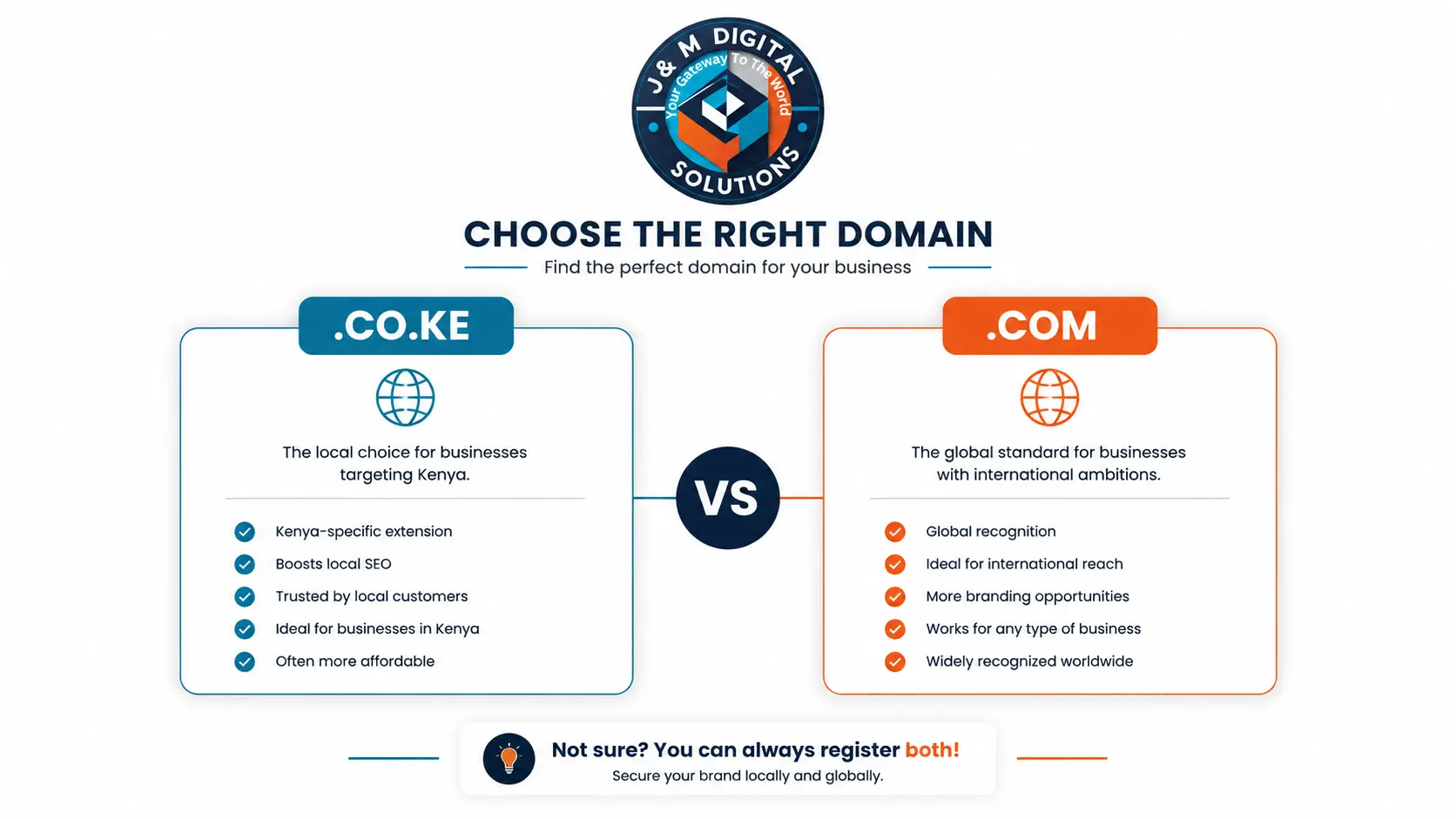
Domain registration is a decision made alongside website hosting in Kenya, and for local businesses it usually comes down to .co.ke versus .com. A .co.ke domain signals a clearly local business and can help with local search relevance, while a .com domain is more globally recognisable and useful for businesses planning to serve customers beyond Kenya. Many businesses register both and point the .co.ke domain to the same site, protecting the brand name on each. Whichever is chosen, the domain registration should be handled in a way that keeps ownership and renewal control clearly with the business, not locked inside a developer’s personal account.
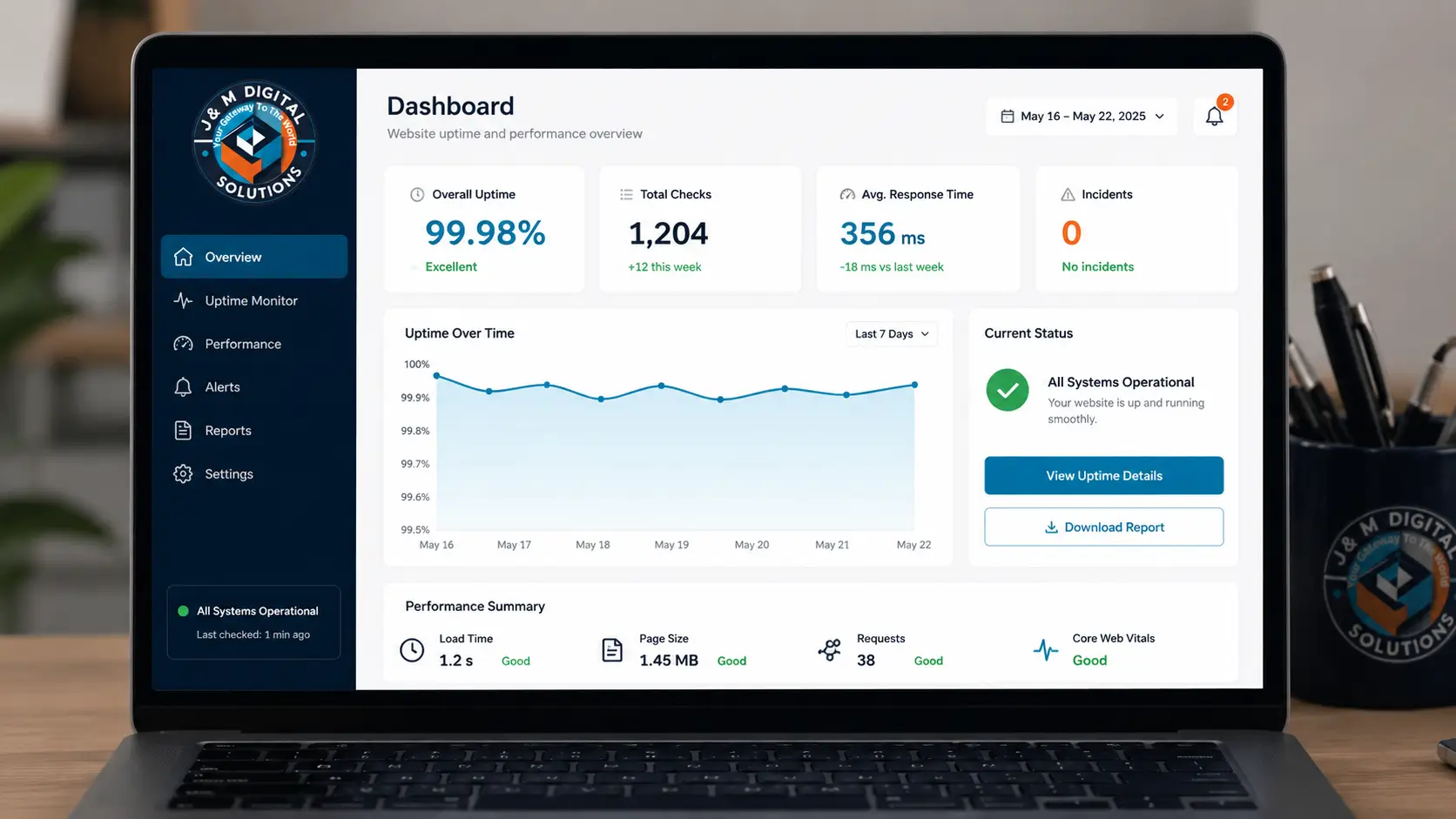
Client: Online Grocery Delivery, Nairobi
This project shows what poor website hosting in Kenya can cost a Kenyan business with real-time sales. An online grocery delivery service was running on the cheapest shared hosting plan available, hosted on a server with no local presence and no uptime guarantee. During a promotional weekend, the site went down for several hours at peak order time, and the business lost a full day of visible sales activity along with customer trust. We migrated the site to a cloud hosting plan with better server placement for East African traffic, automatic daily backups, and a monitored uptime guarantee.
These figures reflect one client’s project and are not a guaranteed outcome for every business. Results depend on the previous hosting setup and the complexity of the site being migrated.
Common Website Hosting Mistakes
These are the mistakes we see most often when a Kenyan business chooses website hosting in Kenya on price alone, without weighing the factors that actually protect the site long-term, whichever provider they end up with.
| Mistake | What Goes Wrong |
|---|---|
| Choosing the cheapest shared hosting with no uptime guarantee | Site goes down unpredictably, often during peak traffic or promotions |
| Letting a developer register the domain in their own name | Business loses control of its own domain if the relationship ends |
| Skipping automatic backups to save money | A hack or server failure can wipe out the site with no way to restore it |
| Ignoring server location entirely | Slower load times for Kenyan visitors, hurting both user experience and SEO rankings |
| Never revisiting the hosting plan as traffic grows | A plan that worked at launch can quietly become the bottleneck slowing the whole site down |
How J&M Digital Solutions Can Help
We handle website hosting in Kenya and migration as part of every website we build, choosing a plan that fits your traffic, budget, and growth plans rather than defaulting to the cheapest option available.
- Full website builds with hosting included through our web design services in Kenya
- WordPress hosting and ongoing maintenance via our WordPress website design service
- E-commerce hosting built for speed and uptime through our e-commerce website design in Kenya service
- Site speed as part of a wider strategy through our SEO services in Kenya
- Real client work on our portfolio page
Not Sure If Your Current Hosting Is Holding You Back?
Send us your website, and we will check your website hosting in Kenya setup, uptime, and speed for local visitors, honestly telling you whether a migration is worth it.
Phone / WhatsApp: +254 769 604 780 | Website: jmdigitalsolutionske.com | Service Area: Nairobi and Nationwide, Kenya
Frequently Asked Questions
What should I look for in website hosting in Kenya?
Focus on server location and speed for local visitors, a published uptime guarantee of at least 99.9%, automatic backups, responsive support, and room to upgrade as your traffic grows. Price matters less than these factors combined.
Should I choose a .co.ke or .com domain?
A .co.ke domain signals a local Kenyan business and can help with local search relevance, while .com is more globally recognisable. Many businesses register both to protect the brand name and point the .co.ke version to the same site.
What is the difference between shared and cloud hosting?
Shared hosting puts your site on a server alongside many others, which is cost-effective but can slow down under heavy traffic from other sites. Cloud hosting distributes resources more flexibly, generally handling traffic spikes and growth more smoothly.
Can slow hosting hurt my Google rankings?
Yes. Page speed is a known ranking factor, and a slow or frequently down website can hurt both search visibility and the user experience that keeps visitors from leaving before the page loads.
Do I need my own domain, or can a developer register it for me?
You should always own your domain outright, registered under your own name and contact details, even if a developer manages it on your behalf. This protects the business from losing control of the domain if the working relationship ends.