
Cart abandonment in Kenya is not just a general e-commerce problem to import advice for, it has causes specific to how Kenyans actually pay and shop online. An M-Pesa STK push that times out, a delivery fee that only appears at the final step, or a checkout that forces account creation before purchase can each quietly cost a sale that was otherwise already decided. This guide covers why carts actually get abandoned in Kenya, practical checkout conversion fixes, and how to recover the sales that still get away.
Why Cart Abandonment in Kenya Looks Different
Cart abandonment rates of around 70 to 90 percent are common across global e-commerce, but the specific reasons behind that number in Kenya are not always the same as what a generic international guide will tell you. Most cart abandonment content is written for stores where card payment is the default and delivery is a solved logistics problem. In Kenya, M-Pesa is the default payment method for most shoppers, and delivery cost and timing are still genuine points of hesitation, not settled expectations. Fixing checkout conversion Kenya stores actually face means addressing these specific friction points, not just applying generic advice. If you are still working out the basics of your store, our full guide on how to sell products online in Kenya covers platforms and setup, while this guide focuses purely on the checkout stage.
M-Pesa Checkout Friction: The Most Common Cause of Cart Abandonment in Kenya
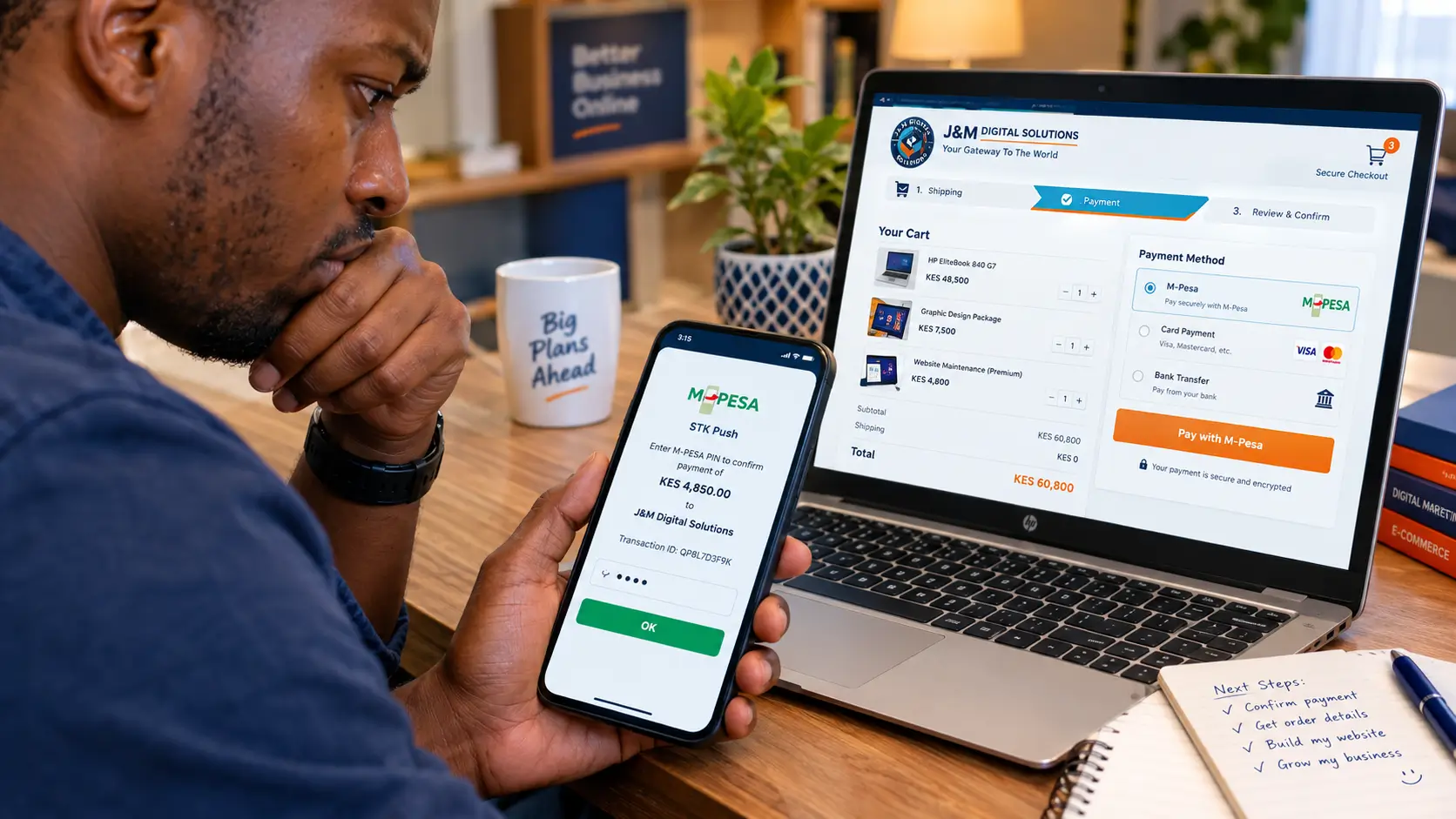
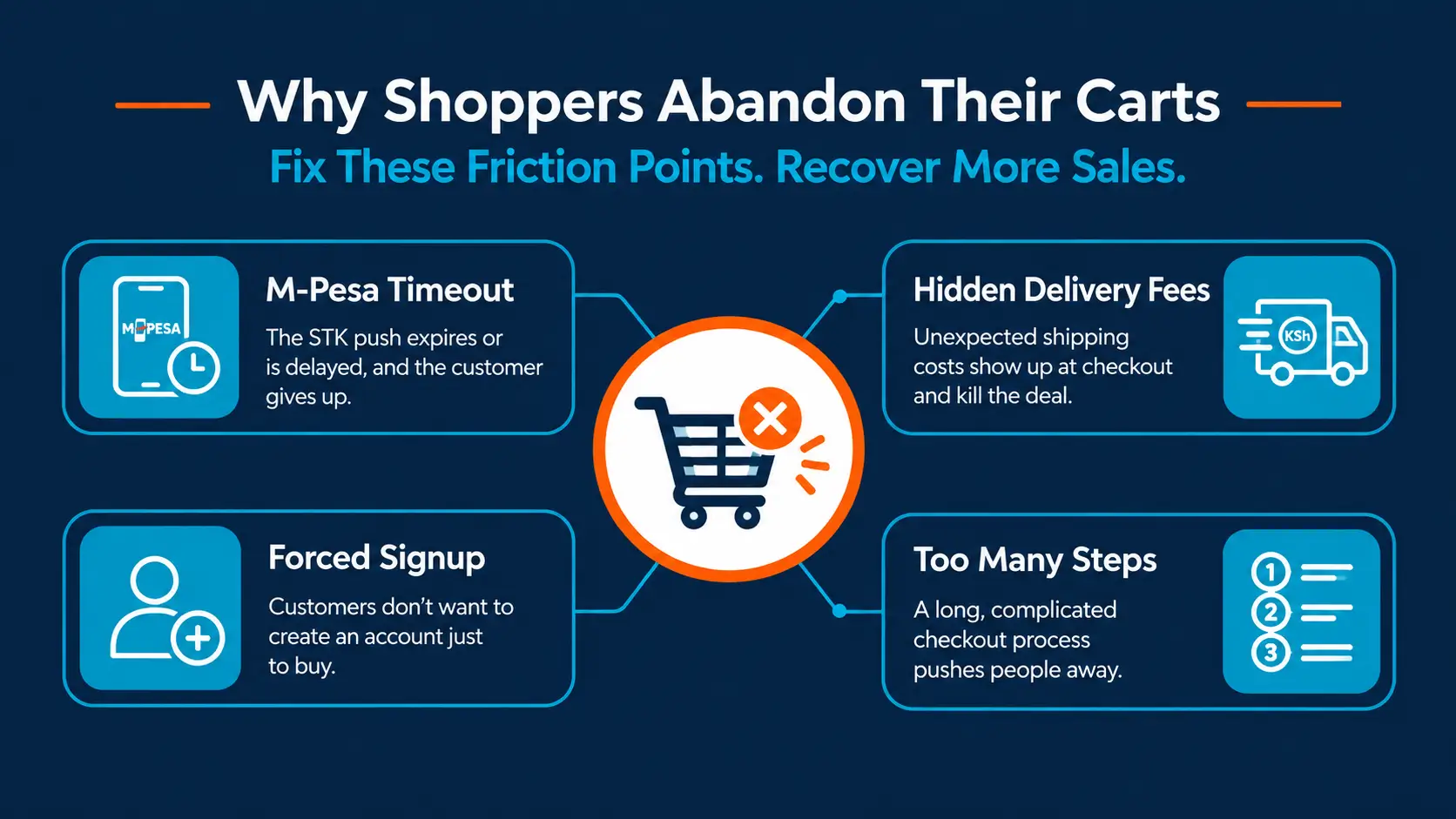
M-Pesa checkout friction is one of the biggest, most fixable causes of cart abandonment in Kenya. An STK push that takes too long to arrive, a customer who accidentally cancels the prompt, or a timeout with no clear next step all end the same way: an abandoned cart, even though the customer genuinely intended to pay.
A checkout that leaves a customer staring at a spinning loader with no explanation, unsure whether their payment went through or failed silently, is one of the fastest ways to lose a sale that was already decided.
Other Common Causes of Cart Abandonment in Kenya
Delivery Cost Appearing Too Late
One of the quieter drivers of cart abandonment in Kenya is delivery cost appearing only at the final checkout step, after a customer has already filled in their details, which reads as a hidden fee even if that was never the intention. Showing an estimated delivery cost earlier, ideally on the product or cart page, reduces this specific source of abandonment significantly.
Forced Account Creation
Requiring a customer to create a full account before they can complete a purchase adds friction at the exact moment they are ready to buy. Letting a customer pay without registering removes this barrier entirely while still allowing you to capture their email or phone number for order confirmation.
Too Many Steps
Every extra screen between “add to cart” and “payment confirmed” is another point where a customer can lose momentum or get distracted, particularly on mobile data where each page load takes a moment. A checkout condensed into as few steps as realistically possible improves checkout conversion Kenya stores can expect from their existing traffic.
How to Reduce Cart Abandonment: Practical Checkout Conversion Kenya Fixes
| Fix | What it addresses |
|---|---|
| Clear M-Pesa STK push messaging and a retry option | M-Pesa checkout friction and payment timeouts |
| Show delivery cost on the product or cart page | Late-appearing fees that feel hidden |
| Offer guest checkout | Friction from forced account creation |
| Reduce checkout to the fewest steps possible | Drop-off from a long, multi-page process |
| Add trust signals near the payment button (secure checkout note, business registration) | Hesitation from unfamiliar or newer stores |
These fixes to reduce cart abandonment do not require rebuilding your store from scratch. Most are configuration or design changes within your existing WooCommerce setup. If your store needs a deeper technical review, our e-commerce SEO in Kenya guide covers the related site speed and structure issues that also affect checkout conversion.
Abandoned Cart Recovery: Getting Back the Sales You Almost Lost
Even the best efforts to reduce cart abandonment will never get it to zero, so an abandoned cart recovery process for the carts that still get away is worth setting up alongside your checkout fixes.
WhatsApp Cart Recovery
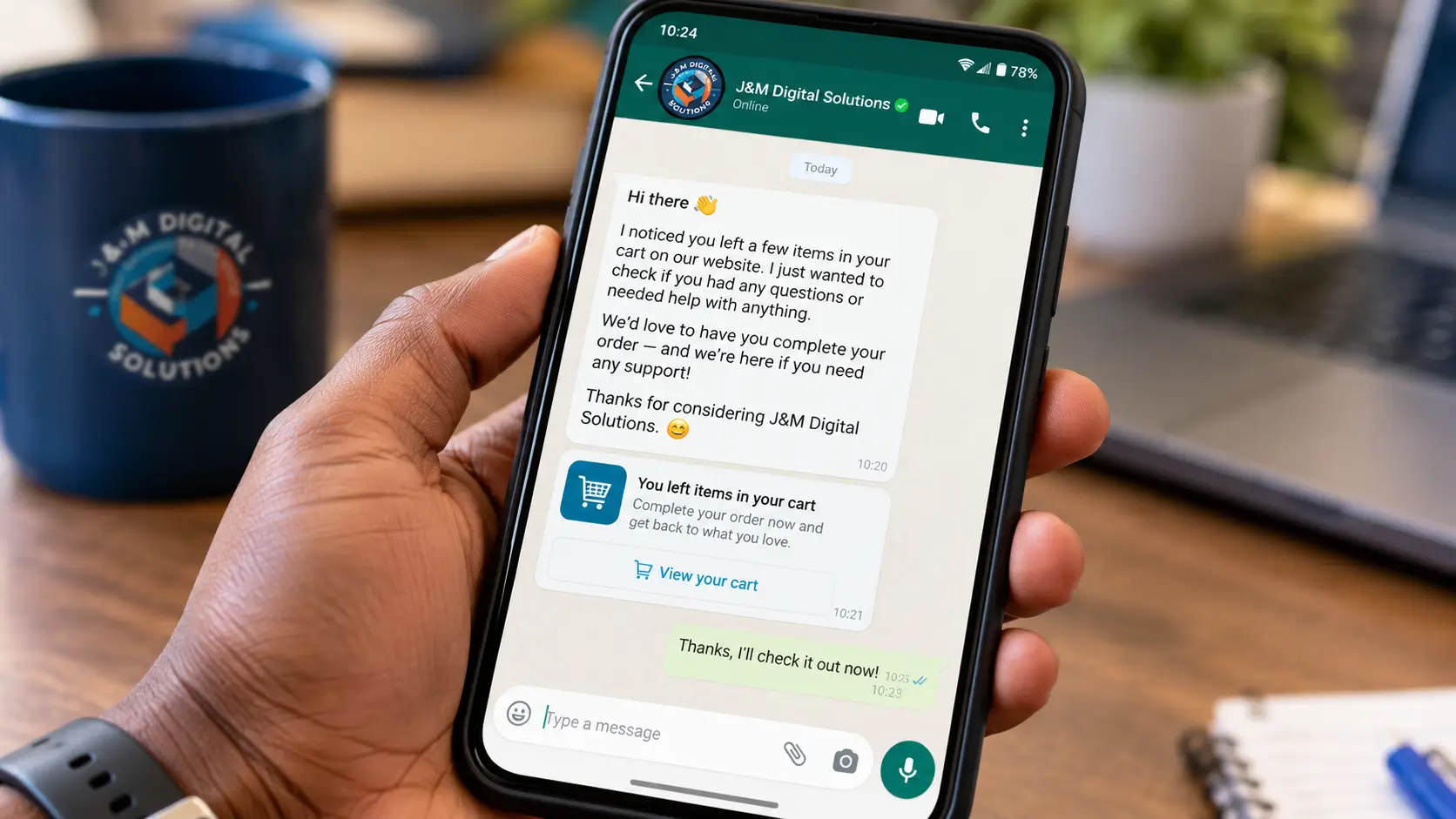
WhatsApp cart recovery is a distinctly effective option for Kenyan stores, given how much commerce already happens over WhatsApp. If you have not yet set up a proper business presence there, our WhatsApp Business in Kenya guide covers getting that foundation right first. A short, personal follow-up message, not an automated-feeling blast, referencing the specific item left in the cart, often converts better than a generic recovery email for the Kenyan market. This works best when you already collect a phone number at the cart stage, even before checkout is completed.
Email Abandoned Cart Recovery Sequences
A simple two or three-email sequence, the first within an hour, a follow-up a day later, still has a place alongside WhatsApp recovery, particularly for customers who provided an email but not a phone number. Keep the message short and include a direct link back to their cart, not just to your homepage.
Common Cart Abandonment in Kenya Mistakes
| Mistake | Why it hurts you | What to do instead |
|---|---|---|
| No clear messaging during the M-Pesa STK push wait | Customers assume something went wrong and abandon rather than wait | Add clear on-screen guidance and a visible retry option |
| Delivery cost only shown at the final step | Feels like a hidden fee, even unintentionally | Show estimated delivery cost earlier in the process |
| Forcing account creation before purchase | Adds friction at the exact moment a customer is ready to buy | Offer guest checkout as the default option |
| No abandoned cart recovery process at all | Every abandoned cart becomes a permanently lost sale | Set up WhatsApp and email abandoned cart recovery follow-ups |
| Treating recovery messages as generic blasts | Reads as spam rather than genuine follow-up | Reference the specific abandoned item and keep the tone personal |
How J&M Digital Solutions Helps With Checkout Conversion Kenya Businesses Need
Fixing cart abandonment in Kenya means building checkout flows around how Kenyan customers actually pay and shop, not a generic template. See our e-commerce website design in Kenya packages, read our guide on how to choose the right e-commerce web designer if you are still comparing providers, or if you are still budgeting for the build, our e-commerce website cost in Kenya guide breaks down what a properly configured checkout actually costs to build and maintain. Based in Nairobi or Kiambu? See our location-specific packages for ecommerce website design in Nairobi or ecommerce website design in Kiambu.
Ready to Reduce Cart Abandonment?
Send us your store on WhatsApp, and we will give you an honest read on where your checkout is losing customers, no vague promises, just what your store actually needs.
Chat on WhatsAppFrequently Asked Questions About Cart Abandonment in Kenya
What is the average cart abandonment rate in Kenya?
Cart abandonment in Kenya broadly follows the global average of 70 to 90 percent, though the specific causes here often relate more to M-Pesa checkout friction and delivery cost transparency than to the payment-method hesitation seen in card-first markets.
How do I stop customers abandoning cart during the M-Pesa payment step?
Add clear on-screen messaging while the STK push is pending, a visible retry option if it times out, and a fallback payment method so a failed push is not a dead end.
Does WhatsApp cart recovery actually work better than email in Kenya?
For many Kenyan stores, yes, given how much everyday commerce already happens over WhatsApp. It works best as a short, personal message referencing the specific item, not an automated-feeling blast, and is most effective alongside email recovery rather than instead of it.
Should I require an account before checkout?
No. Guest checkout removes a significant point of friction at the exact moment a customer is ready to buy. You can still collect their email or phone number for order confirmation without forcing full account registration.
Can I recover an abandoned cart automatically?
Yes, WooCommerce plugins can automate email recovery sequences, and some support WhatsApp integration for automated follow-up messages. Automation helps with consistency, but the message itself should still feel personal rather than generic.