
Good e-commerce product photography in Kenya does not require a studio, a DSLR, or a professional photographer on retainer. Most of the Kenyan online stores with genuinely strong product photos are shooting on the same smartphone you already own, using natural light and a few deliberate techniques rather than expensive equipment. This guide covers exactly how to shoot white background product photos, lifestyle shots, and everything in between, using what you already have.

Why E-Commerce Product Photography in Kenya Is Worth Getting Right
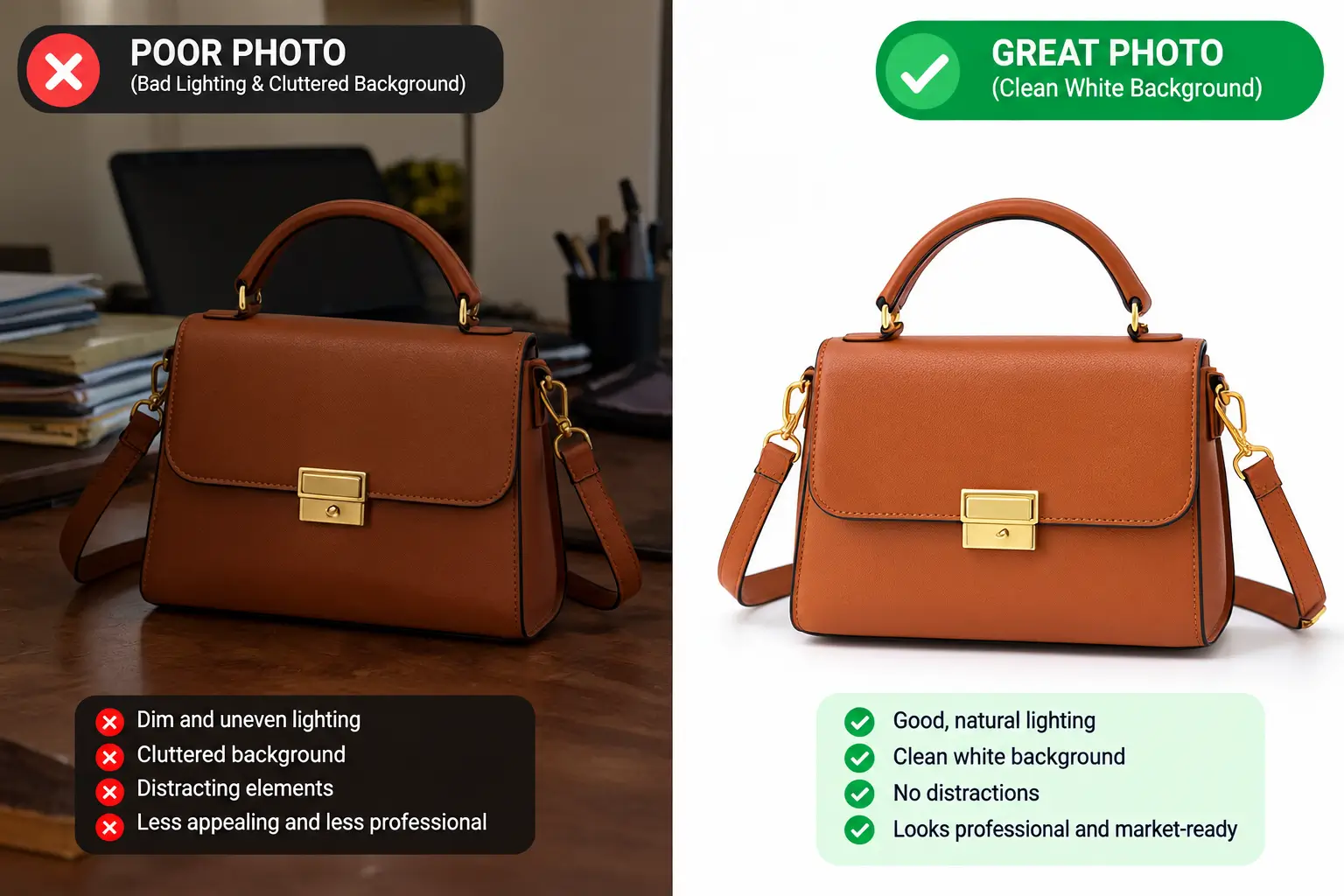
Our e-commerce SEO in Kenya guide covers writing unique product descriptions, but a customer decides whether to even read that description based on the photo first. Poor lighting, a cluttered background, or a blurry shot signals an unprofessional store before a visitor reads a single word, regardless of how good the actual product is. E-commerce product photography in Kenya done properly is one of the highest-return improvements a small store can make, and it does not require a significant budget to fix. If your store still needs the underlying build, our guide to selling products online in Kenya covers the broader setup.
Smartphone Product Photography: The Core of E-Commerce Product Photography in Kenya
Smartphone product photography has closed most of the gap with dedicated cameras for the kind of clean, well-lit product shots an online store actually needs. Any phone from the last several years has a camera capable of producing genuinely usable e-commerce photos, the limiting factor is almost always lighting and setup, not the camera itself.
DIY Product Photos: Setting Up Simple E-Commerce Product Photography in Kenya at Home
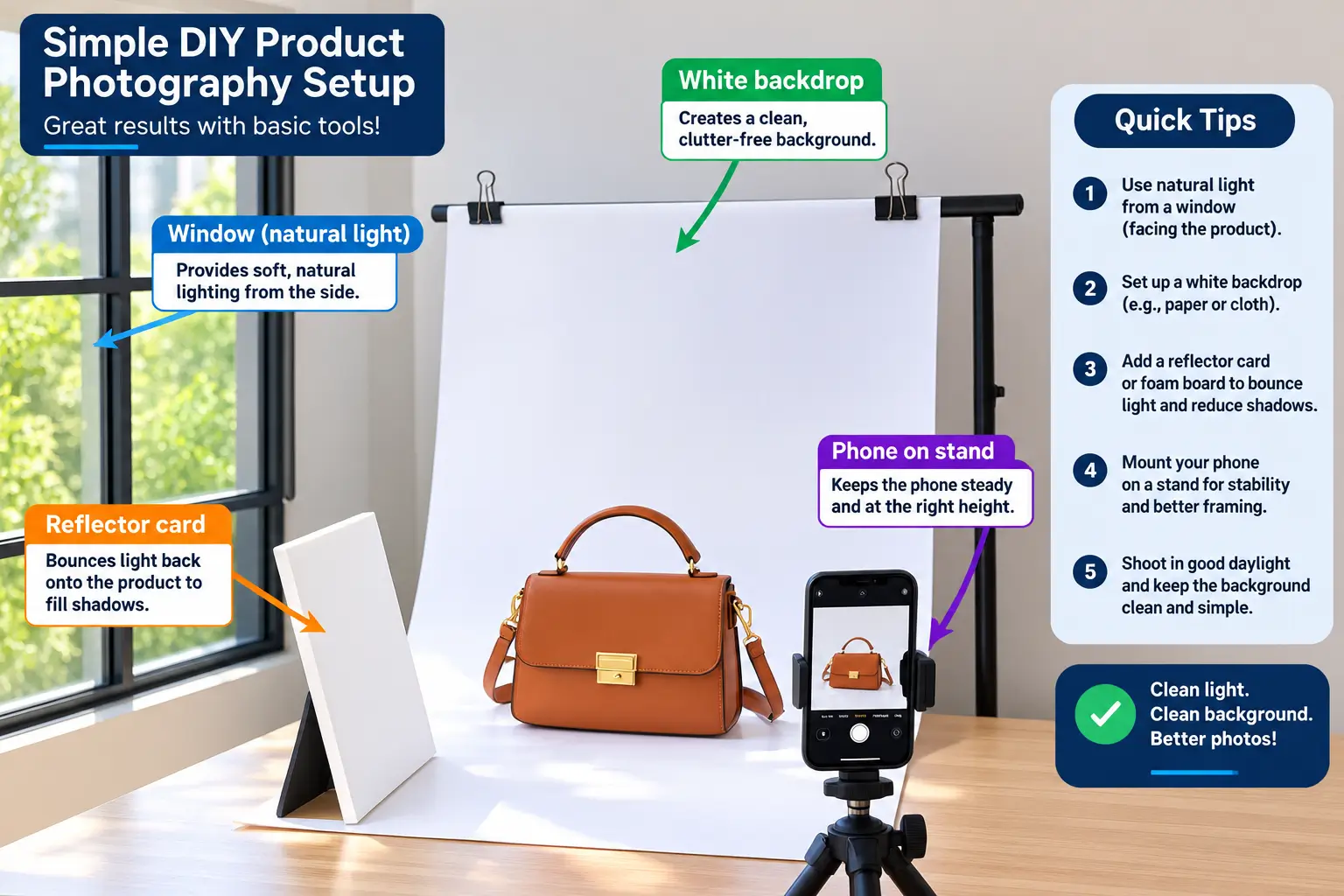
DIY product photos do not need a dedicated room. A simple setup costing under a few thousand shillings covers most small products: a large sheet of white poster board or fabric as a backdrop, curved gently behind the product to avoid a visible horizon line, placed near a large window for natural light.
| Item | Approximate cost (KSh) | Purpose |
|---|---|---|
| White poster board or fabric | 300 – 800 | Clean, consistent backdrop |
| A3 or A2 sized white card (reflector) | 100 – 300 | Bounces light back into shadows |
| Small tripod or phone stand | 500 – 1,500 | Keeps shots level and consistent across your catalogue |
Position your setup near, but not directly in, a window. Direct sunlight creates harsh shadows; a spot a metre or two back from the window, in bright but indirect daylight, gives soft, even light that is far more flattering and consistent than most artificial lighting a small store could afford.
White Background Product Photos: Why They Matter
White background product photos are not just a stylistic preference. Instagram Shop and most marketplace listings specifically require or strongly prefer a clean white or neutral background for the main product image. Our social commerce in Kenya guide covers setting up Instagram Shop, and getting your product photos formatted correctly beforehand saves having to reshoot your entire catalogue later just to meet platform requirements.
To get a genuinely clean white background without expensive studio lights, shoot with even, diffused natural light as described above, then use a free or low-cost photo editing app to brighten and clean up the background in post-processing rather than relying entirely on the original shot.
Product Photo Lighting Setup: Getting Consistent Results
A good product photo lighting setup does not require buying lights at all for most small Kenyan stores. The most reliable, cheapest lighting setup is natural daylight through a window, using your white reflector card on the shadow side of the product to bounce light back and soften harsh shadows. Shoot at a similar time of day for every session, ideally mid-morning or mid-afternoon rather than direct midday sun, so your whole catalogue has a consistent look rather than photos that look like they were shot in different conditions.
Lifestyle Product Photos: Showing the Product in Use
Lifestyle product photos are a different, complementary shot type to your white background catalogue image, showing the product being worn, used, or placed in a real setting rather than isolated on a plain backdrop. These build trust and help a customer picture owning the item themselves. A lifestyle shot does not need the same clean white background discipline, a genuinely nice corner of a room, a table with good natural light, or an outdoor setting that matches your brand all work, as long as the product itself stays the clear focus of the frame.
Common E-Commerce Product Photography in Kenya Mistakes
| Mistake | Why it hurts you | What to do instead |
|---|---|---|
| Using the phone’s built-in flash | Creates harsh, flat lighting and unflattering shadows | Turn off flash and use natural window light instead |
| Shooting directly in harsh midday sunlight | Produces overly strong shadows and blown-out highlights | Shoot in bright, indirect daylight, ideally mid-morning or mid-afternoon |
| Inconsistent backgrounds and angles across the catalogue | Makes a store look unprofessional and disorganised | Set up a repeatable backdrop and shooting position for consistency |
| Only showing one angle of the product | Leaves customers unsure about details, size, or texture | Shoot at least 3 to 4 angles, including any texture or detail close-ups |
| Over-editing colours to the point they misrepresent the product | Leads to returns and complaints when the item arrives looking different | Edit for brightness and background cleanup, not colour-altering filters |
How J&M Digital Solutions Helps
Good e-commerce product photography in Kenya pairs naturally with the rest of your store. We can advise on product photo requirements as part of your e-commerce website design in Kenya project, though photography itself is usually handled separately by you or a photographer. If your product pages need work beyond the photos themselves, our e-commerce SEO in Kenya guide covers writing descriptions and alt text that actually rank, and our cart abandonment in Kenya guide covers what else might be costing you sales at checkout. Nairobi or Kiambu businesses can see location-specific packages for ecommerce website design in Nairobi or ecommerce website design in Kiambu.
Ready to Fix Up Your E-Commerce Product Photography?
Send us your store on WhatsApp, and we will give you an honest read on what is actually holding your product pages back, photography included.
Chat on WhatsAppFrequently Asked Questions About E-Commerce Product Photography in Kenya
These are the questions we hear most often about e-commerce product photography in Kenya from store owners shooting their own catalogue.
Do I need a professional camera for product photos?
No. Smartphone product photography from any phone of the last several years is genuinely good enough for most small online stores, provided you get the lighting and setup right. The camera is rarely the limiting factor.
How do I get a clean white background without a studio?
Use a white poster board or fabric backdrop, shoot in even natural daylight near a window, and clean up the background further using a free or low-cost photo editing app afterward.
What is the difference between a white background photo and a lifestyle photo?
A white background product photo is the clean, isolated catalogue shot required by platforms like Instagram Shop. A lifestyle product photo shows the item in use or in a real setting, building trust and helping customers picture owning it. Most stores need both.
What time of day is best for product photography?
Mid-morning or mid-afternoon, in bright but indirect daylight near a window. Direct midday sunlight tends to create harsh shadows and overly strong highlights.
How many photos does each product need?
At least 3 to 4 angles, including any texture or detail close-ups relevant to the product, so customers are not left guessing about details a single photo cannot show.