
Getting e-commerce shipping in Kenya right is where good marketing and a well-built store can still lose the sale. Get delivery pricing wrong, choose the wrong courier, or mishandle cash on delivery, and the customer who added an item to their cart never actually receives it, or worse, refuses it at the door. This guide covers the actual delivery companies in Kenya online stores use, realistic pricing by zone, same-day delivery in Nairobi, and how to manage cash on delivery without it quietly draining your margins.
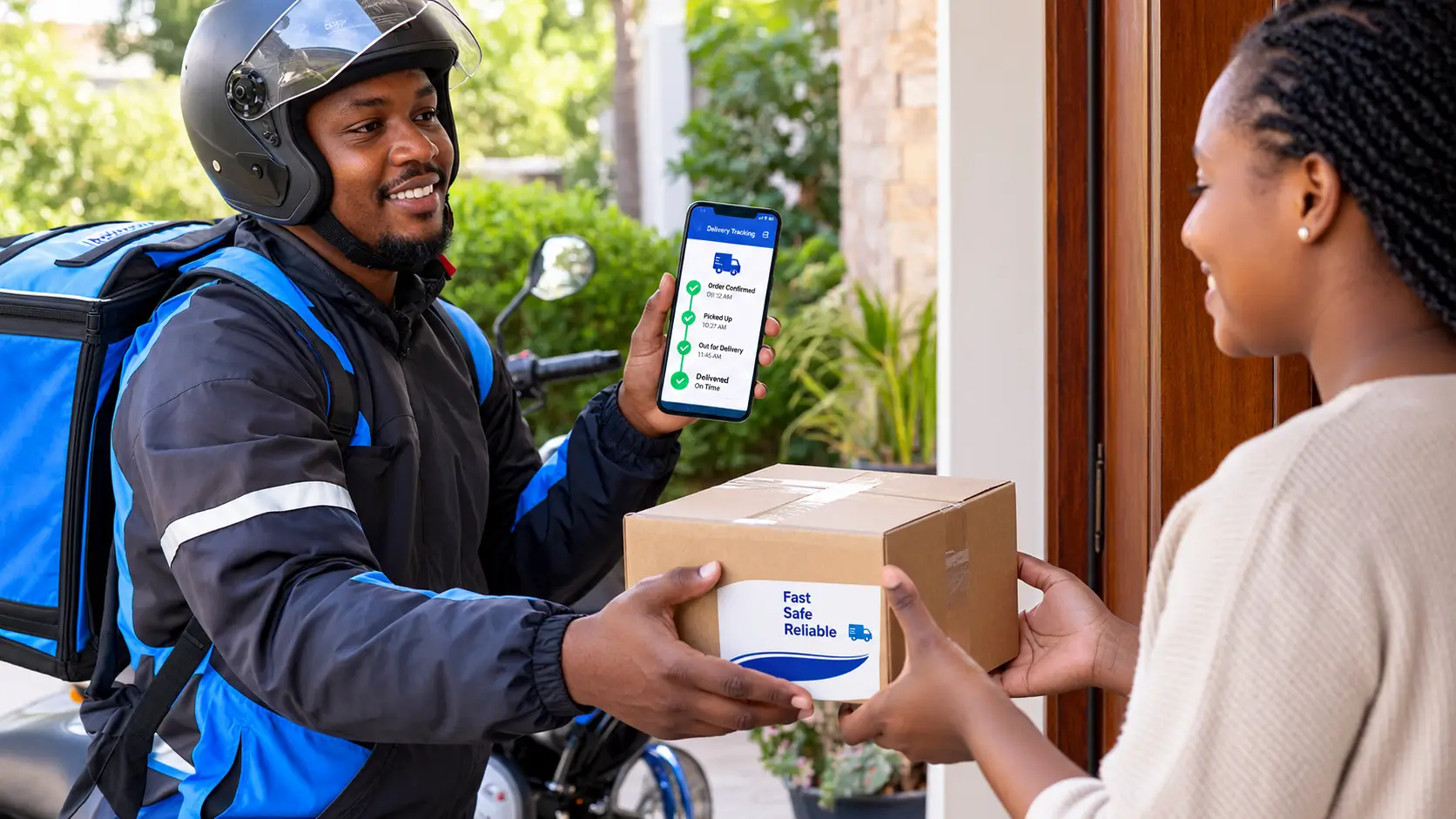
Why E-Commerce Shipping in Kenya Is Part of Your Strategy, Not an Afterthought
Delivery is often treated as a logistics detail to sort out after the store is built, rather than a genuine part of the customer experience. It is not. Our cart abandonment in Kenya guide covers how delivery cost appearing too late in checkout drives customers away before they even pay. E-commerce shipping in Kenya done well means the delivery decision is made deliberately, not left as whatever your courier contact happened to offer first. If you are still working out the broader setup of your store, our full guide on how to sell products online in Kenya covers platforms and getting started.
Delivery Companies in Kenya: What Online Stores Actually Use
A handful of delivery companies in Kenya handle most e-commerce shipping in Kenya volume, each with different strengths, and courier services Kenya online stores rely on vary by budget, speed, and coverage area.
| Courier | Typical Nairobi rate | Best for |
|---|---|---|
| Fargo Courier / Wells Fargo Courier | KSh 300–600 within Nairobi, zone-based (further zones cost more) | Established stores wanting a large branch network (100+ locations nationwide) and predictable zone pricing |
| Sendy | Motorcycle delivery historically from around KSh 250 for shorter distances, though current rates should be confirmed directly, as published pricing changes | On-demand, app-based delivery with real-time tracking, popular with growing online sellers |
| G4S Kenya | Quote-based, typically higher than motorcycle couriers | High-value or sensitive items needing secure handling |
| Posta Kenya | Lower cost, slower delivery | Budget-conscious shipping to areas other couriers cover less densely |
Same-Day Delivery Nairobi: What E-Commerce Shipping in Kenya Customers Expect
Same-day delivery Nairobi has become a genuine customer expectation for stores based in the city, not a premium add-on customers are surprised to see offered, and stores that fail to offer same-day delivery Nairobi shoppers now expect can lose orders to competitors that do. Most couriers work on an order cutoff time, commonly somewhere between 2pm and 4pm, for guaranteed same-day delivery within Nairobi, with anything ordered after that cutoff moving to next-day. Making this cutoff time visible on your product or cart page, not buried in a shipping policy page nobody reads, sets realistic expectations and reduces “where is my order” messages.
Outside Nairobi, next-day delivery to major towns is the realistic standard most couriers offer, with more remote areas taking longer, since last-mile delivery to rural or less-covered locations is where most delays actually happen.
Delivery Zones and Pricing: The Core of E-Commerce Shipping in Kenya
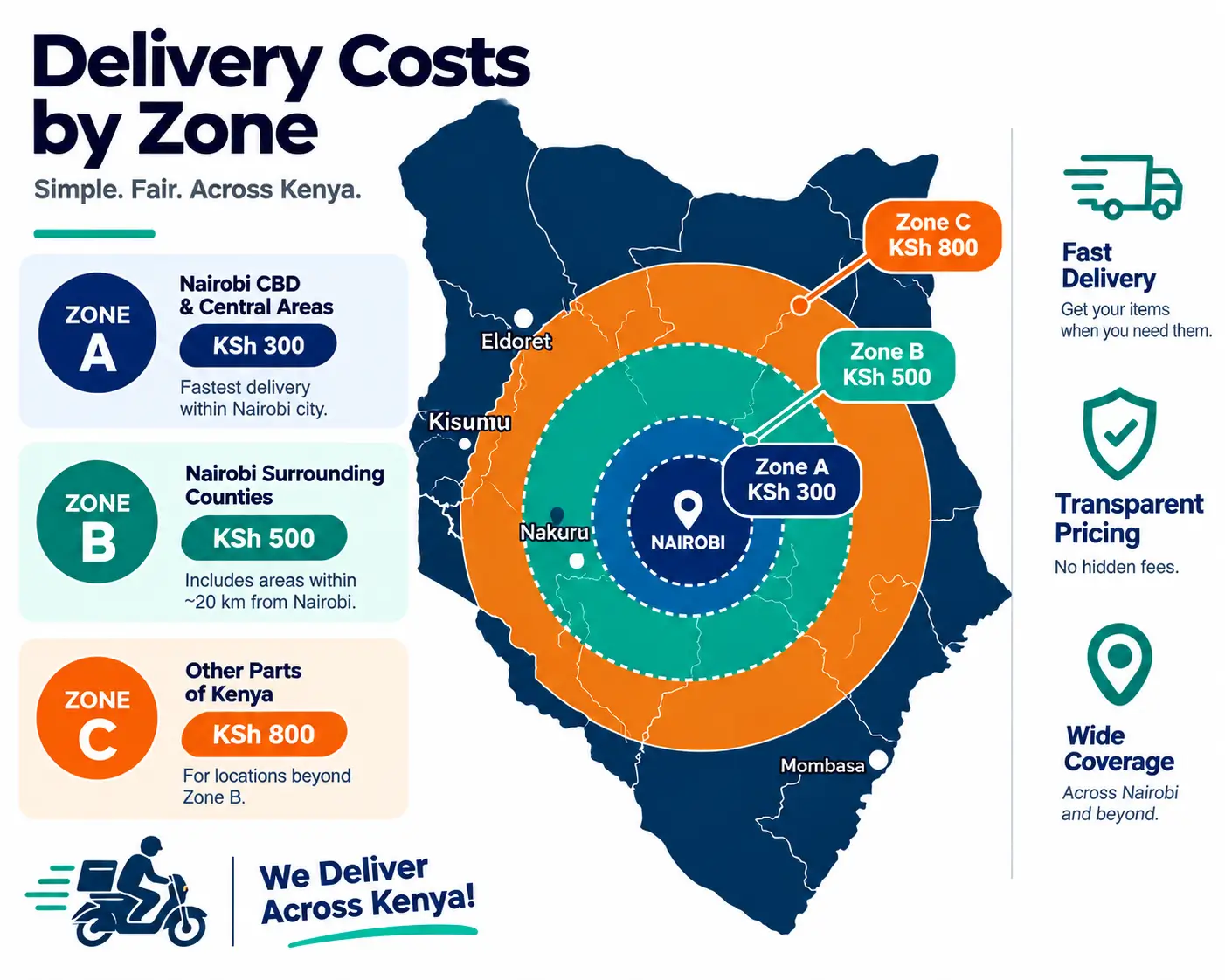
Delivery zones and pricing should be based on your courier’s actual zone structure, not a flat guess. A common approach among Nairobi retailers splits the city into zones, roughly: central Nairobi and nearby estates at a base rate, then increasingly further zones (South B/South C, Kiambu Road, Mombasa Road past Bomas of Kenya, and similar) at incrementally higher rates as distance from town increases. Building your delivery pricing around your actual courier’s real zone map, rather than a single flat rate for the entire city, keeps your margins accurate and avoids either overcharging nearby customers or losing money on distant ones.
Cash on Delivery Kenya: Managing It Without Losing Money
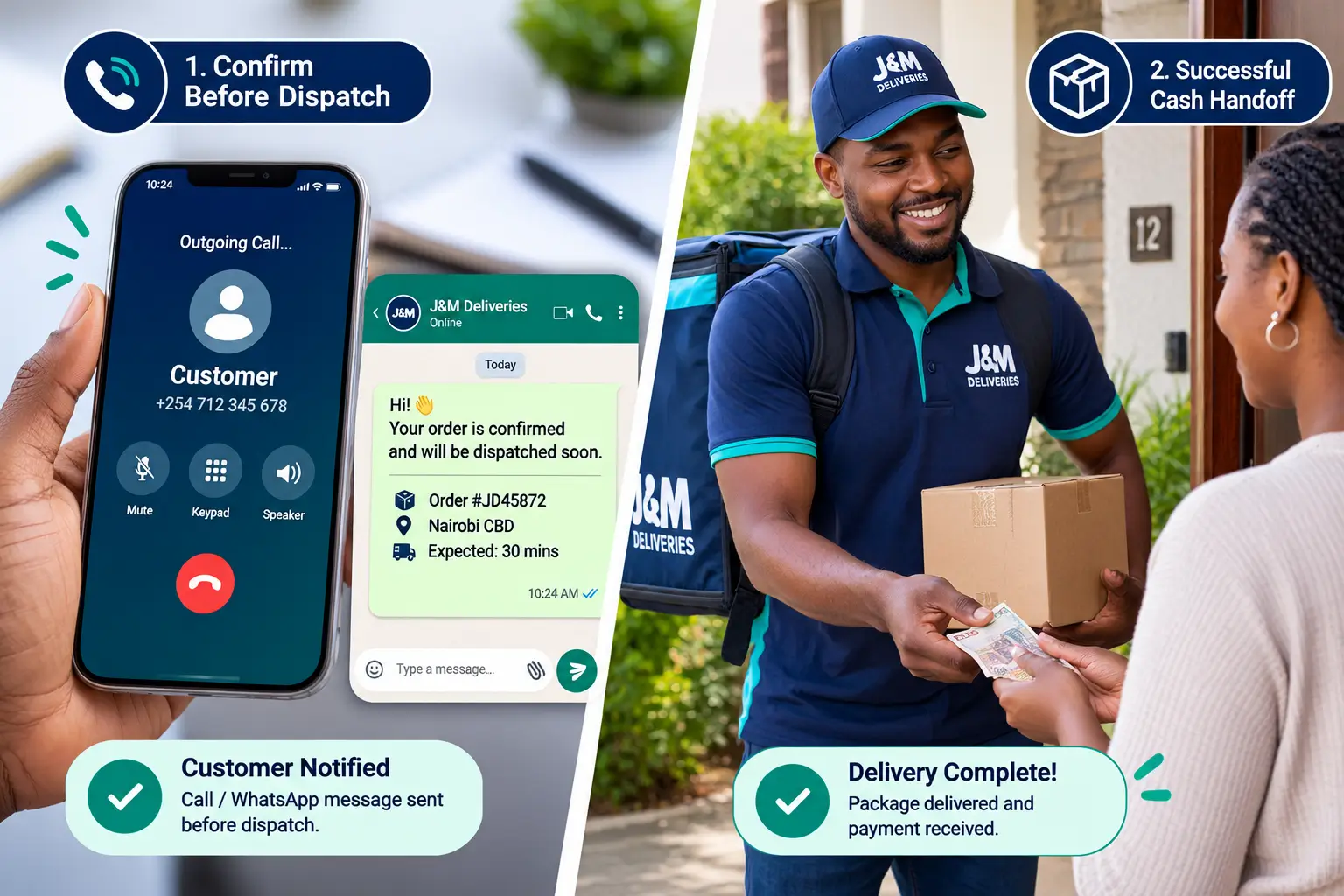
Cash on delivery Kenya remains genuinely important despite widespread M-Pesa adoption, with research showing a large share of Kenyan online shoppers still prefer COD, particularly first-time buyers who have not yet built trust with a new store. Removing it entirely can cost you real sales from exactly the customers most hesitant to pay upfront.
The real risk is the return-to-origin rate, meaning parcels that are prepared, shipped, and then refused or unreachable at the delivery point. Industry figures put the Kenya market average return-to-origin rate around 12 to 15 percent, though well-managed operations can bring this significantly lower. If your COD refusal rate climbs above that range, you are likely losing money on every affected order once courier fees for the failed delivery attempt are factored in.
Common E-Commerce Shipping in Kenya Mistakes
| Mistake | Why it hurts you | What to do instead |
|---|---|---|
| Using a single flat delivery rate regardless of zone | Either overcharges nearby customers or loses money on distant deliveries | Base delivery zones and pricing on your courier’s actual zone structure |
| Not tracking your COD return-to-origin rate | Silent margin loss from repeated refused or unreachable deliveries | Track refusals by courier and area, and act once the rate exceeds 10–15 percent |
| No confirmation call or message before dispatch | Increases refusal and unreachable-customer rates significantly | Confirm by phone or WhatsApp before shipping, particularly for higher-value orders |
| Not advertising same-day delivery cutoff times | Creates unrealistic customer expectations and support enquiries | Display the same-day cutoff time clearly on product and cart pages |
| Relying on a single courier with no backup | A courier outage or delay stalls every pending order at once | Keep a second courier option for edge cases and busy periods |
How J&M Digital Solutions Helps With Delivery Setup
Getting e-commerce shipping in Kenya right is part of what we build into every store. We build delivery zone pricing directly into your WooCommerce checkout, so customers see accurate costs before the final step, not a surprise at checkout. See our e-commerce website design in Kenya packages, or if checkout friction beyond delivery is also costing you sales, our cart abandonment in Kenya guide covers the rest of that picture. Budgeting for the build itself? Our e-commerce website cost in Kenya guide breaks down what proper checkout configuration actually costs, and our e-commerce SEO in Kenya guide covers getting your product pages found once delivery is sorted. Nairobi or Kiambu businesses can see location-specific packages for ecommerce website design in Nairobi or ecommerce website design in Kiambu.
Losing Money on Delivery and Refused Orders?
Get e-commerce shipping in Kenya right the first time. Send us your store on WhatsApp, and we will give you an honest read on your delivery zone setup and checkout, no vague promises, just what your store actually needs.
Chat on WhatsAppFrequently Asked Questions About E-Commerce Shipping in Kenya
These are the questions we hear most often about e-commerce shipping in Kenya from store owners weighing courier options.
Which courier services Kenya online stores should use?
Fargo or Wells Fargo Courier is a common default for Nairobi and major towns given predictable zone-based pricing and a large branch network. Sendy suits on-demand, app-based delivery with real-time tracking. Many stores keep a second courier option for edge cases.
How much should I charge customers for delivery?
Base it on your actual courier’s zone pricing rather than a flat guess. Nairobi deliveries commonly range from roughly KSh 300 for central zones up to KSh 600 or more for further zones, with next-day delivery to major towns outside Nairobi typically costing more.
Should I offer cash on delivery?
For most Kenyan online stores, yes, given how many shoppers, particularly first-time customers, still prefer it. The key is managing your return-to-origin rate, ideally kept under 10 to 15 percent, through order confirmation before dispatch.
Is same-day delivery realistic in Nairobi?
Yes, most couriers offer same-day delivery within Nairobi for orders placed before a cutoff time, commonly between 2pm and 4pm. Displaying this cutoff clearly on your site sets accurate customer expectations.
What is a good return-to-origin rate for cash on delivery?
The Kenya market average sits around 12 to 15 percent. Well-managed stores using confirmation calls or messages before dispatch can bring this notably lower. A rate consistently above 15 percent is worth investigating by courier and by customer area.